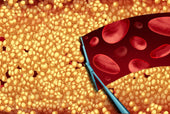

Blood glucose levels are not perfectly constant. After eating carbohydrate-rich foods, blood glucose levels typically increase, and the body reacts to this by releasing insulin.
Online, these changes are often referred to as "glucose spikes." However, the rise in blood glucose levels after a meal is part of a normal bodily response. It is important to distinguish between normal post-meal fluctuations and glucose metabolism disorders, which can be evaluated through appropriate testing.
What happens after eating carbohydrates?
During digestion, some of the carbohydrates obtained from food are broken down into glucose. It enters the bloodstream and can be used by the body's cells as a source of energy.
As blood glucose levels rise, the pancreas releases insulin. This hormone helps regulate blood glucose levels and their entry into cells.
The magnitude and speed of glucose changes after a meal can be influenced by many factors, including the composition and quantity of the food consumed.
Are all carbohydrates the same?
No. Carbohydrate-containing food products vary greatly in their composition.
For example, a sweetened beverage, fruit, legumes, and whole grain products may contain carbohydrates, but they also differ in their content of fiber, protein, fat, and other nutrients.
Therefore, when evaluating a daily diet, it is useful to look not only at how many carbohydrates a product contains but also at its entire nutritional composition.
Can blood glucose levels be determined by how you feel?
Fatigue, hunger, headache, irritability, or cravings for sweets are not specific enough signs to reliably determine blood glucose levels.
Such sensations can be caused by many different factors.
Therefore, how you feel alone is not a reliable way to determine if a person has experienced an unusual change in blood glucose levels.
If you have questions about blood glucose levels or diabetes risk, you should consult a doctor and follow the tests recommended by a healthcare professional.
How to create a varied daily diet?
Instead of trying to avoid blood glucose increases after every meal entirely, it is more practical to focus on the overall quality of your diet.
In your daily diet, you can:
- choose a variety of vegetables;
- eat fruits and berries;
- include legumes;
- choose whole grain products;
- consume various protein sources;
- include nuts and seeds;
- pay attention to the amount of sweetened beverages and products with high added sugar.
What matters is not just one specific food product, but the entire dietary pattern.
What role does fiber play in the diet?
Fiber is part of a varied and balanced diet. It is naturally found in vegetables, fruits and berries, legumes, whole grain products, nuts, and seeds.
However, fiber is not a single, uniform substance. Different types of fiber have different properties, so the effects of all fiber should not be generalized with the statement that they "stabilize blood glucose levels."
Specific health claims depend on the type of fiber, the amount consumed, and other established conditions.
Read more about types of fiber, their sources, and consumption in our Fiber Guide.
Do you need to give up sweets because of glucose?
Not necessarily. A single product should not be evaluated separately from a person's entire diet.
If you crave sweets often, you can pay attention to your general eating routine, the composition of your main meals, snacks, and the situations in which the desire to indulge usually arises.
Read more about this in the article "How to reduce cravings for sweets?"
How can "fruttberry +fiber" complement a daily diet?
"fruttberry +fiber" is a mixture of plant fibers with strawberries and blackcurrants. Its composition includes psyllium (Plantago ovata) husks, agave inulin, glucomannan, freeze-dried strawberries, and blackcurrants.
100 g of the product contains 77 g of fiber, and one 5 g serving contains 3.86 g of fiber and 11 kcal.
In an independent study by the KTU Food Institute, our sample of the mixture was found to contain as much as 84.4 g of fiber per 100 g.
"fruttberry +fiber" is a food supplement that makes it easier to supplement your daily diet with fiber. It does not replace a doctor's recommendations.
Use the product according to the instructions on the packaging and do not exceed the recommended daily dose.
View "fruttberry +fiber" fiber mixtures.
What is most important to remember?
Blood glucose levels naturally fluctuate after eating. The mere fact that blood glucose levels rise after carbohydrate-rich food does not in itself mean a health disorder.
In your daily diet, it is worth focusing on overall food diversity, vegetables, fruits, legumes, whole grain products, and other sources of fiber, rather than trying to completely avoid every blood glucose increase after a meal.
If you have questions about high blood glucose, prediabetes, or diabetes, you should consult a doctor and rely on the results of performed tests.