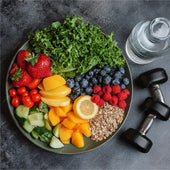

Elevated cholesterol levels are one of the risk factors for cardiovascular disease. The method for lowering them depends on specific blood test results, general health status, and individual risk, so in some cases, lifestyle changes alone are not enough and treatment prescribed by a doctor may be necessary.
Dietary habits, physical activity, non-smoking, and other lifestyle factors are important in your daily routine. In this article, we will discuss what is worth paying attention to in your diet and the role that fiber-rich foods play in it.
What is cholesterol?
Cholesterol is a fatty substance necessary for the body. It is needed for cell membranes, the production of steroid hormones, bile acids, and vitamin D.
Cholesterol is transported in the blood by lipoproteins. LDL and HDL levels are most commonly assessed. Elevated LDL cholesterol is one of the risk factors for cardiovascular disease.
Read more about cholesterol and LDL and HDL levels in the article "What is cholesterol and why are its blood levels important?"
What can influence cholesterol levels?
Various factors can influence cholesterol levels and overall cardiovascular disease risk, including diet, physical activity, smoking, age, heredity, and other health circumstances.
For this reason, cholesterol levels should not be evaluated in isolation. It is best to discuss blood test results and individual risk with a doctor.
What should you pay attention to in your diet?
Diet is one of the areas worth focusing on when caring for cardiovascular health.
In your daily diet, it is worth:
- choosing a variety of vegetables, fruits, and berries;
- including whole grain products more often;
- eating legumes, such as beans, lentils, and chickpeas;
- choosing nuts and seeds;
- paying attention to the amount of saturated fats consumed;
- choosing various fiber-rich plant-based food products.
It is important to evaluate your entire diet, rather than one specific food or nutrient.
What role does fiber play in your diet?
Dietary fiber consists of components of plant-based foods. It is naturally found in whole grain products, legumes, vegetables, fruits, berries, nuts, and seeds.
Different types of fiber have different properties, so one should not attribute the same effect on cholesterol levels to all fiber. Specific health claims depend on the fiber substance, its quantity, and established conditions for use.
Read more about soluble and insoluble fiber, their sources, and their consumption in our Fiber Guide.
How can "fruttberry +fiber" supplement your diet with fiber?
"fruttberry +fiber" is a mixture of plant fibers with strawberries and blackcurrants. It contains psyllium (Plantago ovata) husk, agave inulin, glucomannan, freeze-dried strawberries, and blackcurrants.
100 g of the product contains 77 g of fiber, and a single 5 g serving contains 3.86 g of fiber and 11 kcal.
In an independent study by the KTU Food Institute, our mixture sample was found to contain 84.4 g of fiber per 100 g. The laboratory test results apply to the specific sample tested and do not prove the product's effect on blood cholesterol levels.
The purpose of "fruttberry +fiber" is to supplement the daily diet with fiber. We do not present the product as a cholesterol-lowering agent or a treatment for cholesterol-related diseases.
View "fruttberry +fiber" fiber mixtures.
When should you consult a doctor?
Elevated cholesterol levels often do not cause clear symptoms, so cholesterol levels are determined by blood tests, not just by how you feel.
If tests show elevated cholesterol, a doctor can assess the overall risk of cardiovascular disease and recommend appropriate steps. For some people, lifestyle changes may be enough, while others may also require treatment.
A food supplement should not be used as a substitute for a varied and balanced diet and a healthy lifestyle.